
Makeup Brush Manufacturing Process
The makeup brushes production process is very complicated and rigorous. Many steps can only be performed by skilled craftsmen and cannot be made by machines. A makeup brush is mainly composed of three parts: the brush head, the tube head, and the brush rod. The makeup brush manufacturing process is mainly divided into four steps: the production of the brush head; the production of the tube head; the production of the brush rod; and the combination of the brush head, tube head, and brush rod.
Makeup brush head production
The makeup brush head is the most core part of the entire brush. The materials of the brush head are mainly divided into animal hair and fiber hair. Animal hair is soft and delicate, and fiber hair is becoming smoother with the development of technology. It does not prick the face, has these advantages of good powder holding power, environmentally friendly and affordable price. The production process of the makeup brush head is relatively difficult and involves many steps, which can be roughly divided into weighing the hair, combing the brush, stumping the cup, winding the wire, shaving the hair, adjusting the hair, and injecting glue.

Weighing The Hair
Weighing the bristles helps ensure consistent hair volume for each brush, minimizing variations in size and shape. Since the brushes are handmade, it is challenging to achieve perfect uniformity. By incorporating this weighing step into the production process, we can significantly reduce errors and maintain higher consistency and quality across all finished makeup brush products.
Combing The Bristles
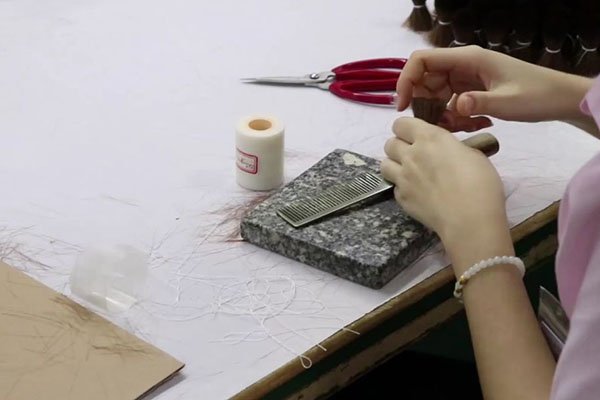
The bristles are a little messy after weighing. They need to be combed again to make each bristle face the same direction and make it neat and smooth.

Bristle Bundling
Placing the Bristles: In this step, the neatly combed bristles are placed into the ferrule (or “cup”).
Tapping the Ferrule: The artisan gently pinches the ferrule with their fingers and repeatedly taps it against a flat surface. This process shapes the bristles into a smooth, layered form.
Thread Binding
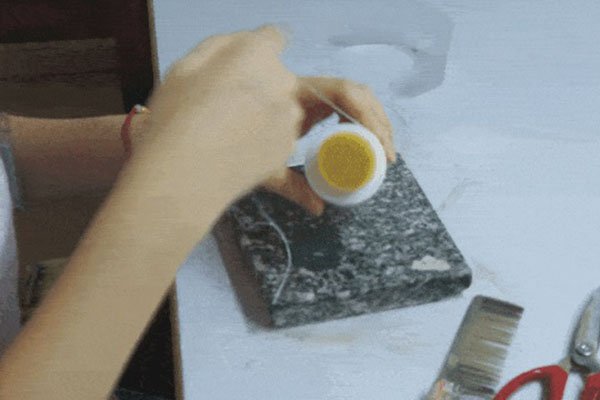
In order to prevent the pierced hair from spreading out and deforming, workers need to use thin wire to manually wrap it around several times until it is tight.
Trimming
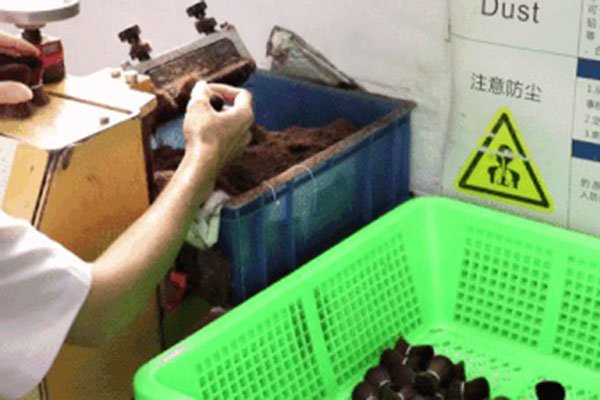
After the thread is wrapped, the hair is shaved manually and by machine to get a more complete brush head shape. Each brush head is shaped by the master with a fast-spinning razor.
Hair Alignment
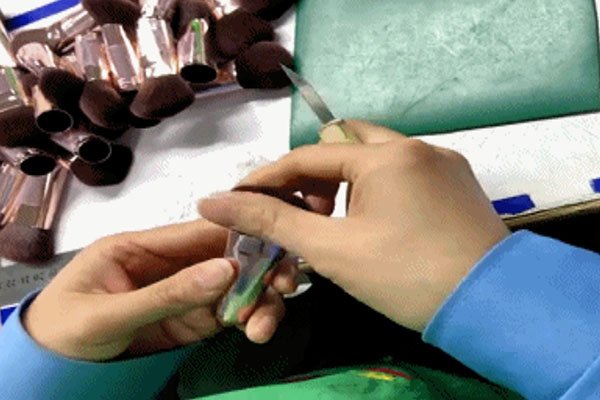
This step involves adjusting the fine hairs at the tip of the brush head to ensure an even, smooth finish. It’s a meticulous process focused on perfecting the brush’s detail and overall quality.
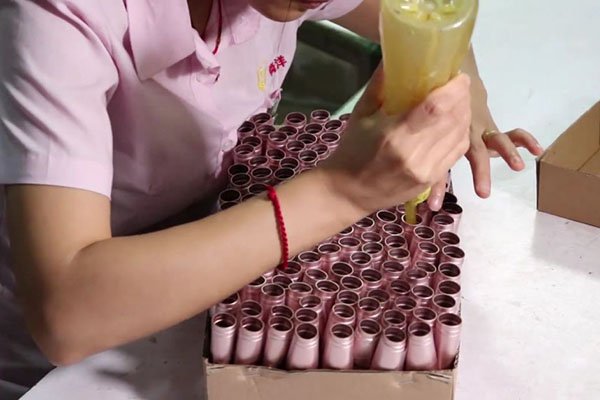
Glue Injection
When the hair head is perfect, the workers will inject adhesive glue into the pipe head to fix the hair head and the pipe head. The glue is usually imported yellow glue, which does not melt when it comes into contact with water.
Makeup brush tube production

Protect the bristles from wear and deformation
The pipe heads are generally made of copper and aluminum. Each pipe mouth will be manually screened before use, and those with color defects and scratches will be eliminated; qualified pipe mouths are wrapped with plastic paper to prevent scratches during the production process.
Makeup Rod tube production
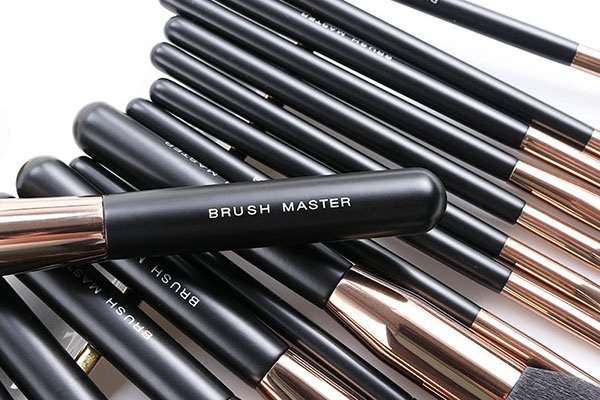
Non-slip, comfortable, easy to hold and durable
There are many types of brush rods, but the main ones are acrylic, bamboo, wooden, metal, etc. Birch is the most common wooden rod. After being designed into the shape of a brush rod, it needs to be painted several times.
Spliced brush rod production

Spliced brush rod
The brush rods are spliced by skilled craftsmen to ensure that the joints are smooth, easy to hold, and stable and reliable; the finished brushes are generally ventilated for 7-10 days, and then they are wiped and broken to check whether there are twisted or loose brushes. Those with problems will be eliminated and will not be sold;